

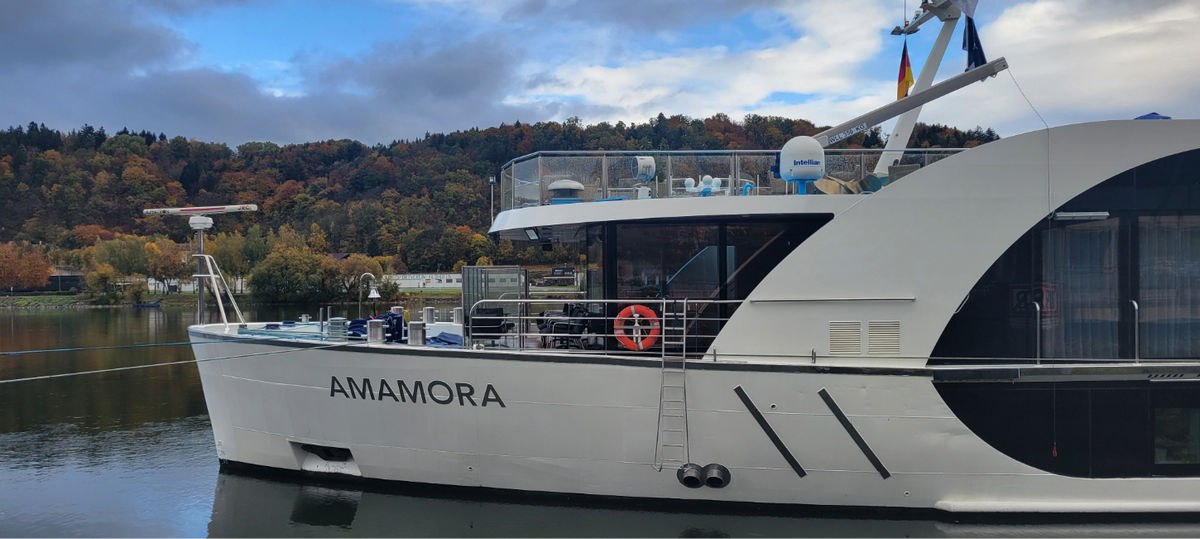

AmaWaterways is an approachable cruise line offering several opportunities to cruise the Danube River in Europe—but if you or your clients are considering other river cruise opportunities, what makes sailing this river so special?
I had the opportunity to travel the Danube on AmaWaterways’ Romantic Danube itinerary onboard the AmaMora during the last week in October. Read on to learn what you could see, what you should pack, and how you can approach your Danube River cruise experience.
What’s the Danube All About, Anyway?
The Danube is one the major rivers in Europe. Once an important trade route for several kingdoms and empires trading in salt, beer, wine and other important goods, today it’s one of the world’s major river cruise routes, with all the major players carrying passengers both up and down the river.
Humanity has settled along rivers for millennia, so it’s no wonder that many of the cities and towns located along the river are old—like, Roman Era ancient. Vienna, Salzburg, Bratislava and Budapest, all major destinations along the Danube, were first built by the Romans in the ancient world.
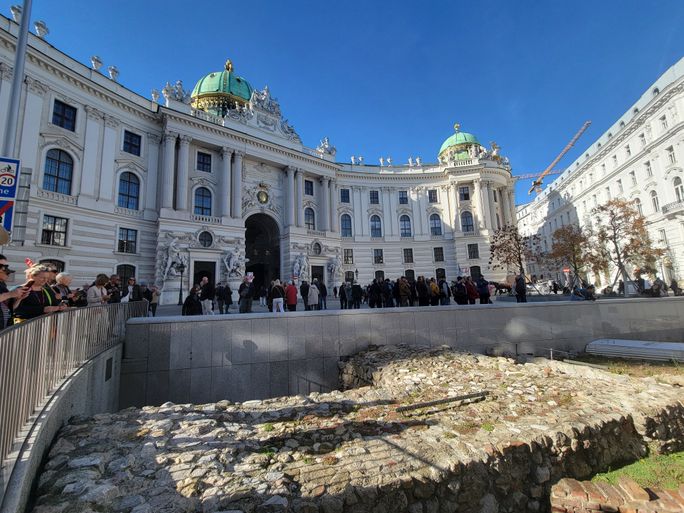
Ancient Roman ruins are displayed next to imperial structures in Vienna, Austria. (Photo Credit: Lacey Pfalz)
I traveled along AmaWaterways’ Romantic Danube itinerary, spending a few days in Munich on the brand’s land package before heading to Vilshofen, and from there, sailed to Passau, Salzburg, the Wachau Valley, Vienna, Bratislava and Budapest.
The Danube Destination Spotlight
From Bavaria, where beer is considered a food, to Budapest, which is currently undergoing a transformation into the next major European destination, there’s a lot to see when sailing along the Danube.
While I won’t spoil everything, I will say this: the last week of October is the best time of year for leaf peepers heading to the Danube. Everything was brilliantly colored—and during our scenic sailing through Austria’s Wachau Valley, the grape vines were bright yellow, shining brightly in the sunlight.
I was also surprised by which destinations captured my adoration the most. Before this trip, I’d only visited France, so I was curious about which of the four countries would become my favorites.
Over and above, I’d love to return to Bratislava, Slovakia and Budapest, Hungary. While I loved every place I visited, there’s just something a bit realer about those two cities, as if they haven’t taken on that tourist hotspot shine that Vienna’s major tourist quarter and Munich’s upscale historic center has.
Here are my top takeaways from each destination I visited:
Munich, Germany: The glittering capital of Bavaria, Munich is a beer and pork-lover’s dream. Its historic quarter is home to numerous luxury stores, several museums (including the Residenz Palace, which I highly recommend to learn about the history of Bavaria as a kingdom) and a lively Bavarian culture with plenty of good food.
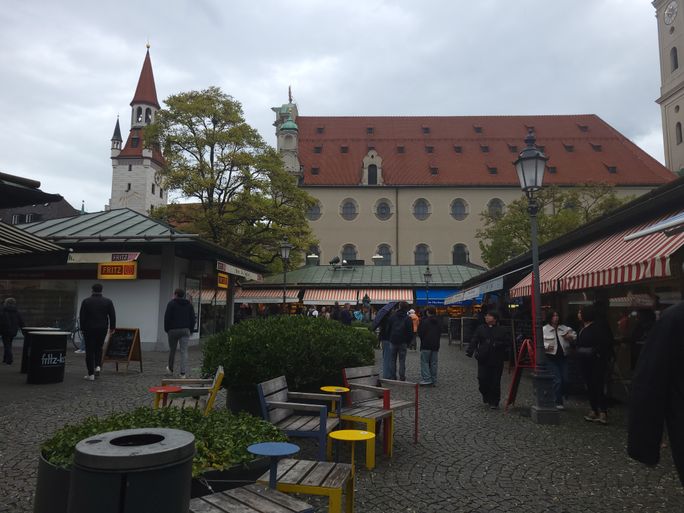
The Viktualienmarkt in Munich, Germany. (Photo Credit: Lacey Pfalz)
My Recommendation: I’d recommend spending a good amount of time at the Viktualienmarkt, a traditional open-air outdoor market that offers everything from live plants (which, sadly, we can’t take with us) to a delicious wiener schnitzel on a roll. For a nature-based activity, take a long wander through the Englischer Garten—you might just see locals surfing in the middle of the city. For dinner or lunch, try the Augustiner Klosterwirk, a traditional Bavarian restaurant that’s so good, you might just find yourself seated next to Munich residents!
Vilshofen, Germany: Vilshofen is your small German city, and while I was disappointed that I could only wander around it on Sunday, when businesses are required to be closed, I found it a cute, charming place, with pastel-painted buildings and a medieval history.
My Recommendation: One of AmaWaterways’ signature experiences happens here: its exclusive Oktoberfest celebration. Held at the start of every cruise, the celebration comes with a local band, complete with pretzels and the locally made pilsner. Travelers can experience a bit of German culture by learning traditional Polka songs, dancing and enjoying some lively bar games.
Passau, Germany: Passau is a fascinating place, located where three rivers meet. I’m not sure if there’s another place quite like it in the world. It’s got a fortress dating back to Medieval times, and plenty of restaurants and shops to enjoy, including one selling traditionally made cuckoo clocks.
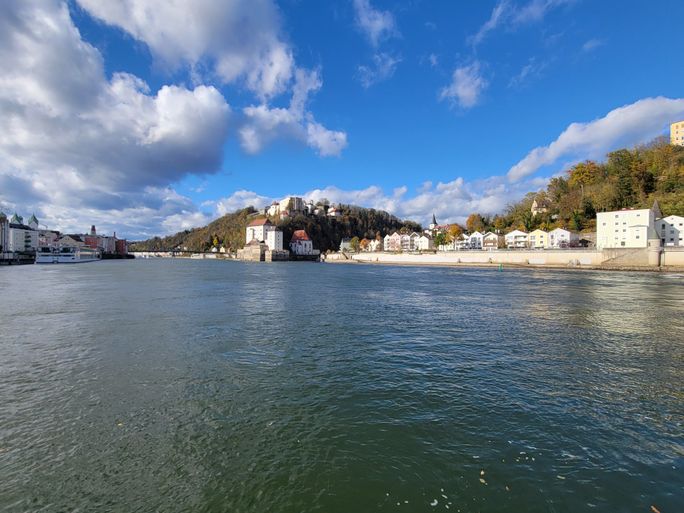
The three rivers meet in Passau, Germany. (Photo Credit: Lacey Pfalz)
My Recommendation: the walking tour is a lovely introduction to the town, which you can then leave to wander off down the narrow cobblestone streets. I was there on a Sunday, which meant a lot of things were closed, but the church was open, and so were a few shops that had gotten permission from the government to remain open on Sundays for us. The church is gorgeous, and while I didn’t go up to the fortress, it’s known for offering the best view of the town, the three rivers and the surrounding area.
Salzburg, Austria: Salzburg is known as the filming location for some of “The Sound of Music,” as well as the birthplace of Mozart, a centuries-old history of salt trade and a thriving music and arts culture. The cruise offered a two-hour bus ride into the Austrian Alps for a day trip to visit Salzburg, and it was lovely—though cold and rainy the entire day.
My Recommendation: If it’s inclement weather when you’re there, or you’re just wondering where to get a bite to eat, go to Cafe Tomaselli. It’s a gorgeous cafe that dates back to the early 1700s, and it might just be Europe’s oldest coffee house, so it’s definitely not to be missed. Beyond that, travelers can head up to the Fortress Hohensalzburg if they have the time.
Wachau Valley, Austria: The next day of the cruise was a scenic sail through the Wachau Valley, Austria, with an afternoon option to visit a selection of different towns on tasting tours, bike rides or other experiences. I took the tour that visited Dürnstein and the Melk Abbey. While I definitely didn’t have enough time to fully enjoy the small town of Dürnstein, I loved visiting it and learning about its history through our tour guide. The Melk Abbey is a giant architectural masterpiece that’s set to impress, especially if you love visiting churches and other religious sites.
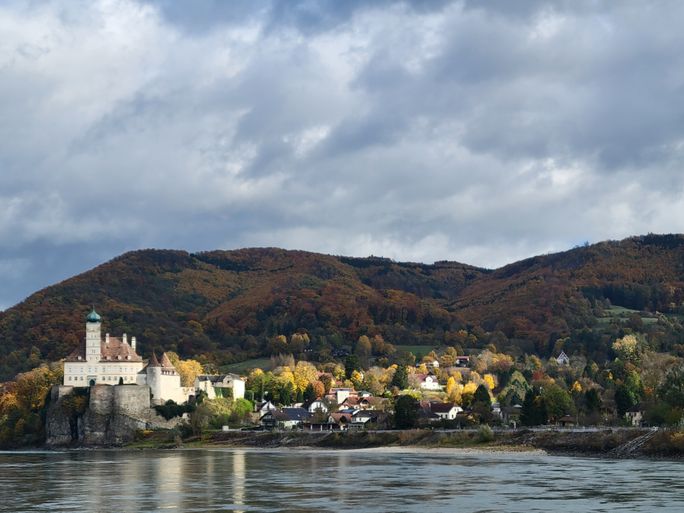
A castle and village along the Wachau Valley region of the Danube River in Austria. (Photo Credit: Lacey Pfalz)
My Recommendation: Spend your entire morning on the top deck watching the scenery roll by—it’s the best place for photographs, especially of you and your loved ones amidst the castles, ruins, scenic vineyards and more. Pick the tour you’d like, or go off on your own; just know that the towns might close early, since they’re small and rural, so don’t expect too much nightlife after dark. Whatever you do: try some apricots, and when the AmaWaterways dining crew asks you if you’d like a glass of the local white, say yes. You won’t regret it.
Vienna, Austria: Ah, the Imperial City. If you’re like me and took a lot of the previous tours, you’ll hear a lot of the same names repeated, and one overarching one: the Hapsbourgs. One of the most powerful dynasties in Europe, this family ruled from Vienna, and it shows. Many of the city’s municipal, governmental and museum buildings were originally part of the imperial palace complex, now open for the delight and edification of travelers and residents alike.
My Recommendation: There’s a ton to see and do in Vienna; I did a bit of everything. Definitely check out a museum if you can, and visit St. Stephen’s Cathedral, which is crowded but lovely. If you’ll be spending a lot of your time in the Imperial complex area of the city, consider dining at Palmenhaus, a gorgeous restaurant set within an Imperial greenhouse, or a traditional coffee house.
Bratislava, Slovakia: Bratislava surprised me the most. I had a lovely time there, and really enjoyed the walking tour, which gives cruisers a good mental picture of where they are in the small city center. Once the tour finished, I popped into a few shops, visited the church, tried a Bratislava roll and walked over to the new mall complex for a short perusal.
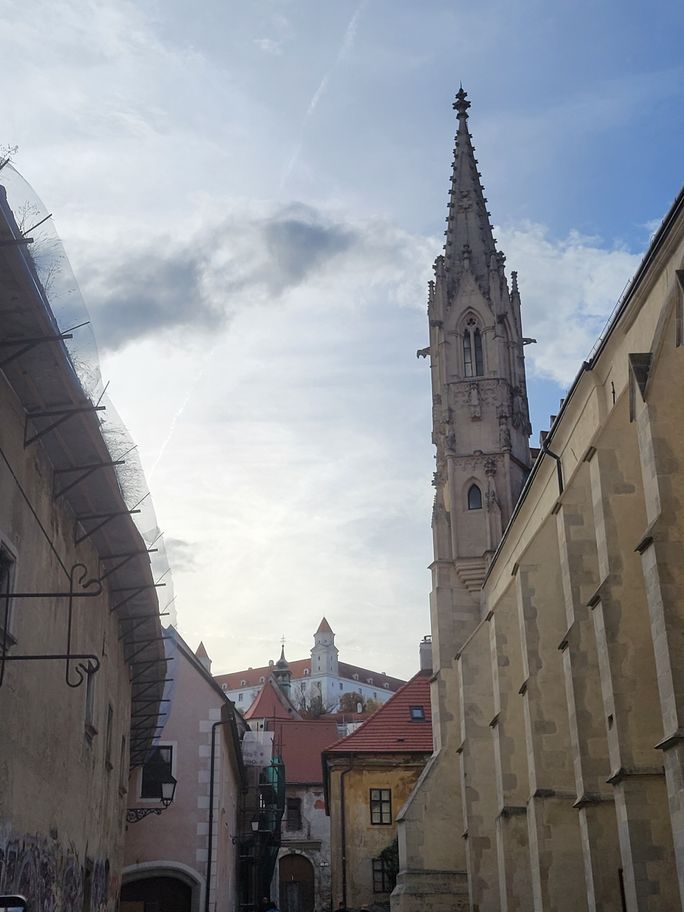
The view of Bratislava’s old town. (Photo Credit: Lacey Pfalz)
My Recommendation: Definitely try a Bratislava roll—they’re delicious. Also, if you have an hour or two, try to find one of the most unique experiences of your life: a New Age tea house nestled within a WWII-era bunker. It’s underground in the city center, so only the most observant travelers will be able to find it. Otherwise, the city itself is a great place to wander around.
Budapest, Hungary: Ah, the city I wish I had more time in. I only stayed a day in Budapest before I had to leave at 3:00 a.m. for the airport, which I kind of regret. Budapest is beautiful—both the Buda side and the Pest side. AmaWaterways offered a tour to both sides, which I took, giving me a good introduction of both sides. Since a lot of buildings that had fallen into disrepair or had been destroyed during WWII were now being rebuilt, there were a lot of restoration projects going on, making me think that, once completed, Budapest will shine even brighter.
My Recommendation: Even if you’ve seen all the churches there were to visit on your trip before coming to Budapest, you need to see Matthias Church—it’s unlike anything you’ve ever seen before. Secondly, try to learn a bit about the history of Budapest and Hungary, even if you decide to forgo a tour. The Hungarian people have a unique history unlike any other culture in Europe, and you’ll be missing out if you don’t learn at least a little bit. Lastly, try a chimney cake—they’re pastries roasted over a spit and dusted with cinnamon and sugar, or your desired toppings. They were the best thing I ate on my cruise.
Important Considerations and River Cruise Travel Tips
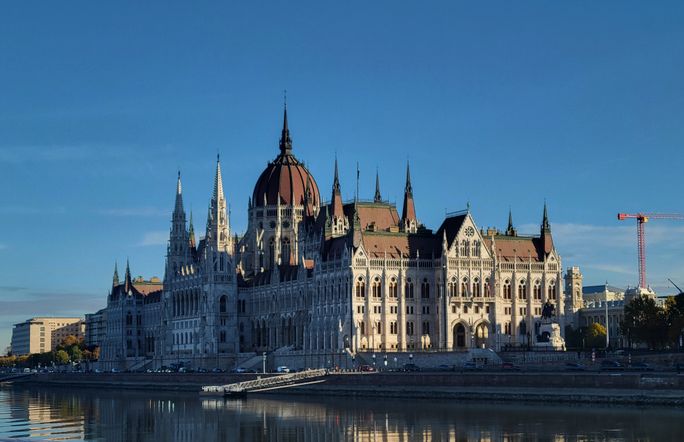
The Hungarian Parliament building in Budapest, Hungary. (Photo Credit: Lacey Pfalz)
First thing’s first: river cruises typically aren’t physically accessible—and that was especially true with this one. While many of the tours include bus rides to landmarks or historic quarters, this trip requires a ton of walking, especially if you’re like me and want to see as much as you can in a single day.
AmaWaterways, like many cruise lines, provides an activity rating for each tour they offer, so you can understand what physical requirements the tour would ask of you.
A lot of the ports we visited also required us to walk several miles each day, sometimes in wet weather, and often required several flights of stairs, even to use a restroom inside a restaurant.
If you have limited mobility or have an injury that impacts your mobility, talk with your healthcare provider, your travel advisor and your travel companions, so you understand your options and any adaptations you might have to make, like scaling back how much you can see in each port, choosing less active trips, or choosing a different method of travel altogether.
Purchase a travel insurance plan for any major trips you might take, including a river cruise.
Next, traveling during late October: it’s rainy. If you want to travel to Europe on a river cruise without worrying about packing a raincoat and your waterproof boots, visit during the summer instead.
I sailed during the last week in October, when fall colors were at their height, which was honestly amazing, so it can be a mixed bag: while the colors were amazing, I also experienced half a trip of rain. While it didn’t ruin the experience, it does change it.
Munich rained every day I was there, so I wore a jacket and good waterproof shoes pretty much the entire time.

The view of the fortress above Salzburg, Austria. (Photo Credit: Lacey Pfalz)
Salzburg was a completely rainy, cold day, prompting me to duck into a cafe with my traveling companion (my grandfather, who lived there for a few years in his young adulthood, later informed me that this was normal, that Salzburg receives a lot of rain—so perhaps it would be better expect it to be rainy there, even in the summer).
A note about pickpockets: while some tour guides warned us to watch out for pickpockets, especially in Vienna and in Bratislava, I didn’t notice any suspicious behavior. The time when we visited wasn’t the high tourist season, with less dense crowds where pickpockets are more likely to target unsuspecting individuals.
Still, be sure to keep your valuables close and consider investing in a more secure purse or bag, or at the very least—be aware of your surroundings and who is around you.
Lastly, AmaWaterways: AmaWaterways is a lovely cruise line, often attracting active, lively folks who love making new friends, experiencing new places and learning new things. The staff was helpful and fun, the food was delicious and my fellow cruisers were friendly.
My Takeaway: The Danube is Delightful
The Danube is a beautiful river, full of scenic cruising sights, insightful history and delicious food. Travelers wanting to experience a part of Central Europe might really enjoy seeing it via river cruise, where they’ll unpack once and still see several countries in the same trip—the only issue they’ll have is wanting to return again in the future.
For the latest travel news, updates and deals, subscribe to the daily TravelPulse newsletter.
