

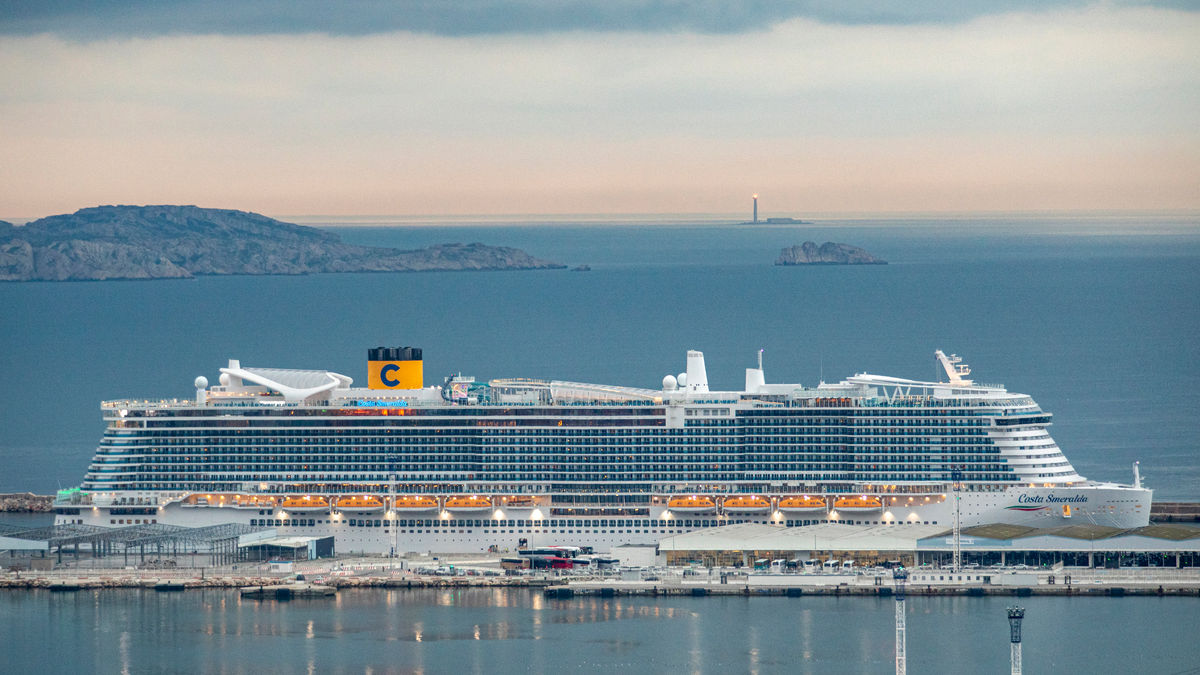


For North American
travel advisors, Costa
Cruises represents both an opportunity and a shift in mindset — a European-born
cruise brand that delivers something quite different from the mainstream U.S.-based
experience. With its Italian
flair, a globally diverse onboard culture, and a destination-centric approach
to cruising, Costa appeals to clients who want more than a floating resort. In
this Q&A, Priscilla Reyes, Head of Sales for North America, breaks down who
Costa is right for, how to position it and how advisors can sell it with
confidence.
For advisors who
may be less familiar with Costa, how do you describe the brand in one or two
sentences when positioning it to North American clients?
Costa Cruises
is an international type of cruise line with an Italian flair. So, it’s about
more than just a vacation. It’s about discovering unique Sea and Land Destinations
and reconnecting our guests with the world in meaningful ways, exploring other
cultures, and cruising with people from different countries. Life on board is certainly
an international experience, so I think that is our main brand positioning.
Something international, something different from what you’re used to from the
North American perspective — and that’s what we really thrive on.
Where does Costa
sit in the cruise spectrum for U.S. travelers — especially compared to more
familiar mainstream or premium cruise lines?
Overall, I’d say
we’re in the contemporary category of cruising. We appeal to guests of all ages
and demographics. We definitely love to have our silver couples and our younger
multi-generational families on board. The nonnas and nonnos, and all of the
grandparents who are kind of taking their whole family on these cruises. So, there’s
absolutely something for everyone, but along the contemporary line. I would say,
in reference to our sister brands, we are kind of between a Carnival
Cruise Line and a Princess
Cruises.
What types of
North American clients tend to be the best fit for Costa Cruises, and why?
I would say that
our ideal guest is one who is driven by curiosity. People who want to
experience the places they’re visiting, not just get on the ship and be locked
into an American lifestyle on board. They want to bring that international
flavor into their journey. I believe that’s the key to our experience: bringing
the international lifestyle on board so you’re engaging in it from the moment
you get onboard, when you’re off at the ports and when you come back on the
ship.
How does Costa’s
approach to food and wine reflect Italian culture in a way North American
travelers can immediately understand and appreciate?
Of course, for us,
food is super important. And I think the best example of how we bring that to
life is Archipelago.
There, you have Angel Leon, Bruno Barbieri and Helene Darroze — they bring
French, Italian and Spanish flair, and they bring them together in such a
curious and wonderful way. The five-course meal is something guests can dive
into and experience, and taste the flavors from these three Michelin-starred
chefs.
We also have, for
example, the Pummid’Oro pizzeria, the Nutella bar, the Aperol Spritz bars, and
the Frescobaldi wine experience, which I think are wonderful things that people
can experience on board, as well. So, we really try to lean into that Italian
gastronomy and food quality, and make sure that people’s experiences are
wonderful. And, all of the meals on board are prepared with local, traditional
ingredients.
I believe our
exceptional hospitality is also something that sets us apart. Whatever area of
the ship you’re on, I feel our people do a good job of making everyone feel
comfortable and ensuring their needs are met. They take their jobs and positions
very seriously, and I think that makes a big difference.
Are there certain
itineraries or homeports that North American advisors should be especially
excited about selling?
I think the Caribbean
is always a great selling point for us. We’re in La Romana, we go to Catalina
Island, we really explore Santo Domingo and the Dominican
Republic from kind of a different perspective. We’re a little bit different
from the other brands.
We don’t have
private islands, but we tend to collaborate with the destinations we visit. In
the Dominican Republic, for example, we have a partnership with the tourism
board, so we offer a more local experience there.
We’re also going
to be back in the United
Arab Emirates this year. The Emirates is definitely a very interesting
destination and very good sailing for us; we’re there from December to March. Unfortunately,
we did not have that program in ’25, and I’m excited to have it back for ‘26
and ‘27.
Another key
development is that, in 2027, we’ll have our World
Cruise, which will visit North American shores for the first time in a very
long time. We’re going to be in San
Francisco, and we’re going to make stops in Miami
and New
York.
What advice do you
have for advisors who may be nervous about selling a more European-style cruise
experience to first-time Costa guests?
I think Costa
Cruises, given the value we deliver and the prices we offer, is definitely a worthwhile
option for any client. And I don’t believe any travel advisor should be worried
or concerned about selling the European style of sailing. I think, for guests
who are looking to have an adventure and truly experience the European
lifestyle, our brand makes sense. And it also makes sense from a value-driven
perspective.
How can advisors
best set expectations upfront, so clients are thrilled—rather than surprised—by
Costa’s international onboard atmosphere?
I believe that
Costa’s guests need to really be comfortable with the various languages being
spoken on board. We have multiple embarkation ports, so people are getting on
and off the ship throughout the sailing. You arrive in Spain and there are a
lot of Spanish locals coming on board — then, you stop at Marseille and everything
shifts.
That’s something
important for travel advisors to keep in mind—that the energy on board is
constantly changing. It’s not as though you’re getting on board with the same
group of people you’ll be disembarking with. Our guests should be aware that we
operate this way because we are one of the few brands that do. That’s something
I always speak to advisors about: we want to make sure we’re giving all of this
to guests upfront, because the last thing we want is someone’s experience to
differ from what they expect.
If they’re an avid
cruiser with Carnival or Princess, they’ll have certain expectations as to what
their voyage will be like. We need to make sure that they’re educated enough to
understand that our brand — flying under the Italian flag — we’re just a little
bit different. They should also be aware that North American guests are often
in the minority on our voyages.
How does the
company support travel advisors looking to sell Costa Cruises to their North
American clientele?
Educating our travel advisors on the tools we have is essential. We’re actually rolling out a new travel advisor academy, which will be very helpful for us. And it’s quite a short course — only six modules. It kind of walks you through what we offer and what makes our experiences a little bit different. This should make travel advisors’ lives much easier, enabling them to present our product more robustly, since there are always things they may not remember or be aware of. It will be a very easy way for them to educate themselves, keep it in their toolbox and present Costa to their clients properly.
For the latest travel news, updates and deals, subscribe to the daily TravelPulse newsletter.
