

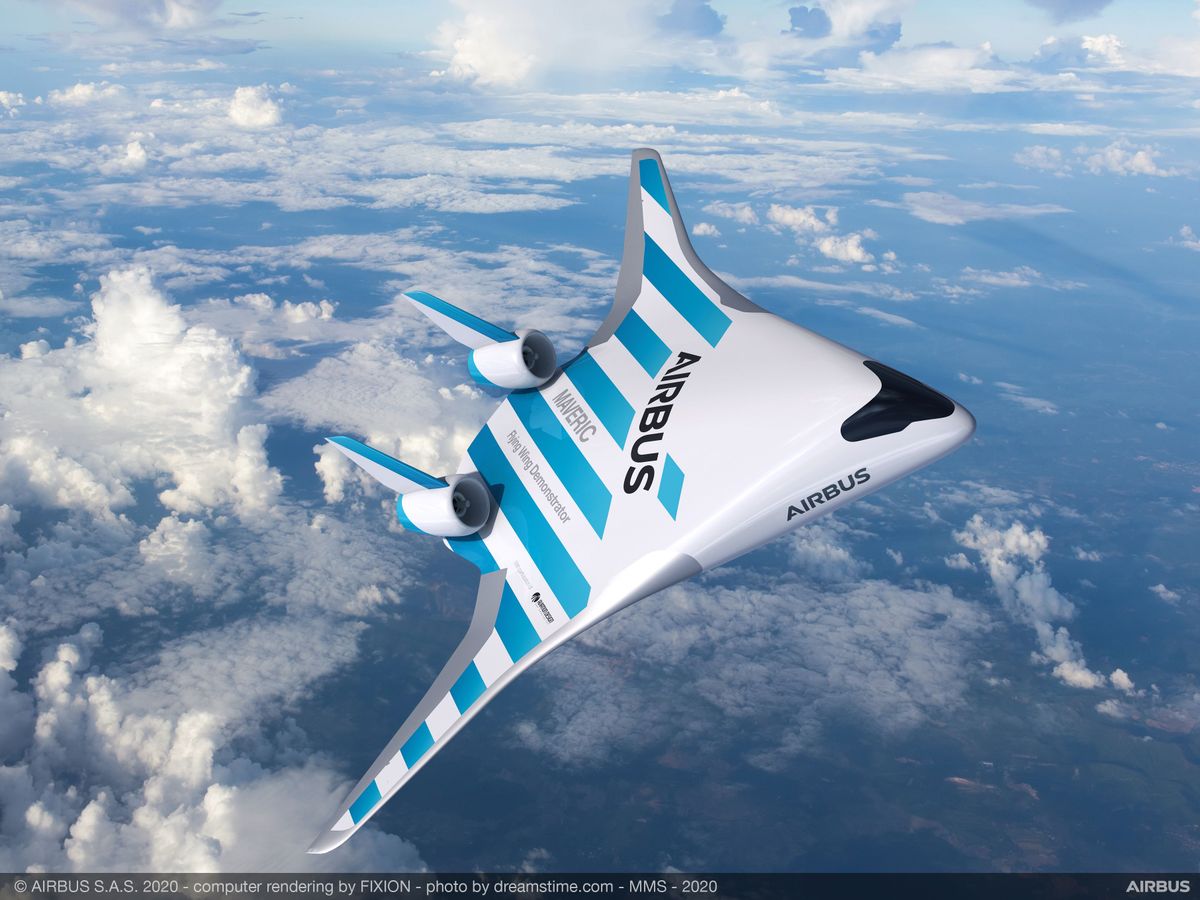

In the next few decades, the standard passenger aircraft will look radically different, according to the head of one of the world’s largest plane manufacturers.
Airbus CEO Guillaume Faury said in a recent interview that in the next 30 to 40 years, passenger planes will favor a thicker, triangle-like shape with a flat tail called a blended wing body design. Faury discussed the futuristic designs in early December with German newspaper Bild.
The design concept has never before been used for a passenger aircraft, however military planes, like the B2 Spirit stealth bomber designed by Northrop, have utilized different versions of blended wings. Thanks to their unique shape and ability to fly at higher altitudes, blended wing planes are 20% to 50% more fuel efficient than today’s jets.
Airbus’s proposed version of a blended wing aircraft features up to 20% fuel savings, less noise, larger aisles, and more legroom for passengers. The new design could even eliminate windows in the plane’s cabin, Faury said. Airbus first released proposed designs of its blended wing model in 2020 when it launched a small-scale flight demonstrator at the Singapore Air Show.
However, the French plane manufacturer is far from the only company endeavoring to launch blended wind passenger flight.
One of the most prominent companies in blended wing design is JetZero. The company, which is based in Long Beach, California, aims to operate a full-scale blended wing demonstrator plane by the late 2020s.
JetZero says that when it launches its Z4 blended wing aircraft by 2030, it will offer fliers an elevated travel experience, including wider seats with more personal space, larger doors for faster boarding, and dedicated overhead bin room for each passenger. Major airlines including Delta, United, and Alaska Airlines have all placed future orders for the plane.
Still, other companies aim to use the design to add more perks to commercial flights. San Francisco-based company Nautilus is working to launch a passenger blended wing plane called Horizon that will feature benefits never before seen onboard commercial aircraft.
Horizon is designed to compete against the Boeing 737 MAX and Airbus A321neo but with 40% more space inside, according to Nautilus. The aircraft will hold 200 passengers and offer travelers three private, video-enabled work pods that can act as in-flight conference rooms for business travelers, as well as a Deluxe Club Seating product, where groups of four travelers can sit face to face. The cabin will also feel airier, with sweeping ceilings more than seven feet tall.
Using that extra space, Nautilus plans to “create a more comfortable and enjoyable cabin,” Aleksey Matyushev, CEO and co-founder of Nautilus, said of the Horizon aircraft in July. “This aircraft will provide our commercial airline customers with the ultimate platform to elevate the passenger experience.”
For the latest travel news, updates and deals, subscribe to the daily TravelPulse newsletter.
