


Phu
Quoc may feel like a discovery for American travelers, but in Vietnam, it’s
anything but a secret. I flew 16 hours nonstop from San Francisco to Ho Chi
Minh City, followed by a short connecting flight to Phu Quoc (pronounced foo
kwok).
Part
of a 22-island archipelago, Phu Quoc is Vietnam’s largest island and one of its
most beloved beach escapes. It’s known for white-sand beaches, polished resorts
with attentive service, a growing food scene, and nightly, large-scale
entertainment shows.
Getting
there is straightforward thanks to Phu Quoc International Airport (PQC), which
offers frequent domestic flights from Ho Chi Minh City, Hanoi, and Da Nang, as
well as direct international service from several Asian hubs.
Travelers
arriving directly into Phu Quoc receive 30 days of visa-free entry, though U.S.
travelers transiting through mainland Vietnam must obtain a visa or an e-visa
in advance.
Once
on the island, taxis, ride-hailing apps like Grab, and resort transfers make it
easy to explore both beaches and entertainment zones.
Phu
Quoc has two main seasons—rainy and dry—with the best conditions typically
between November and April. I visited in November and, while the weather was
ideal, it was still quite warm, so keep that in mind when booking.
For
Americans looking beyond familiar beach destinations like Thailand or Bali, Phu
Quoc stands out for combining infrastructure locals already love with the sense
of discovery U.S. travelers crave.
Two
to three days is plenty to explore and unwind, and its air connectivity makes
it easy to continue onward through Vietnam or Asia.
Where to Stay: JW Marriott Phu Quoc Emerald Bay
If
you’re splurging on a resort stay, the JW Marriott Phu Quoc Emerald Bay is the
most transportive option on the island.
Designed
by Bill Bensley, the beachfront property is imagined as a fictional French
university called Lamarek University, complete with colorful buildings, playful
academic references, and a sense of whimsy that leans into fantasy without
feeling overdone.
The
sprawling grounds are fun to explore, with lush landscaping and unexpected
touches, such as oversized squirrel statues outside the Department of Mammology
villas.
Rooms
are indulgent enough to happily spend the day inside, featuring
Indochine-inspired design, oversized soaking tubs, plush bedding, and private
balconies or terraces—many overlooking Emerald Bay.
Dining
is a highlight, anchored by Pink Pearl, the resort’s intimate fine-dining
restaurant housed in a pastel-hued mansion. French culinary technique meets
thoughtful presentation in a setting that feels more like a private dinner
party than a hotel restaurant, complete with live music and parting gifts like
white chocolate pearl clams.
Spa
Chanterelle continues the property’s imaginative storytelling, drawing
inspiration from Alice in Wonderland. From staff in sky-blue dresses to
mushroom-lined walls, it’s a spa experience that feels entirely unlike any
other.
Phu Quoc: What to Do
Ride the Hon Thom Cable Car
One
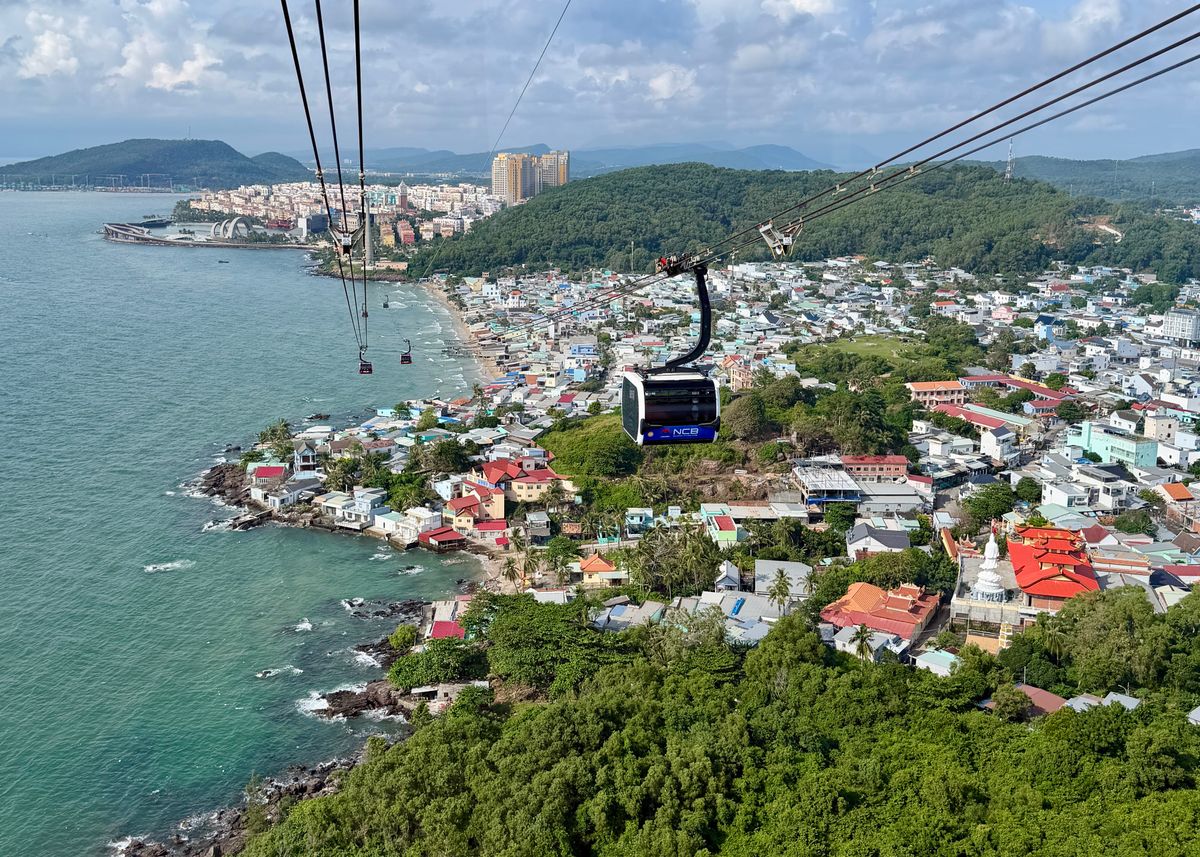
of Phu Quoc’s most iconic experiences, the Hon Thom Cable Car is the world’s
longest sea-crossing cable car.
Stretching
across the Gulf of Thailand, it connects the main island to Hon Thom (Pineapple
Island) and delivers sweeping views of Sunset Town, fishing boats, and the
surrounding archipelago. Once on Hon Thom, visitors can explore beaches,
entertainment zones, and Aquatopia Water Park.
Explore Sunset Town
One
of the island’s most unexpected areas, Sunset Town is designed to resemble a
Mediterranean coastal village, with pastel façades, arched walkways, tiled
staircases, and replicas of landmarks like Rome’s Colosseum and San Francisco’s
Lombard Street.
From
café-lined streets to ornate fountains and hillside townhouses, it’s not
something you’d expect to find in Vietnam.
Sunset Town Night Shows
After
dark, Sunset Town comes alive with two large-scale, ocean-staged productions. Kiss
of the Sea is the marquee show, blending music, choreographed fountains,
lasers, fire effects, and immersive 4D elements staged directly over the water.
Symphony of the Sea delivers another over-the-top performance with synchronized
music, light projections, jet-ski stunts, flyboarding, aerial acrobatics, and
LED-costumed performers. Both shows culminate in impressive fireworks finales.
For
the full experience, dine at Sun Bavaria Gastropub, which pairs German
specialties and Vietnamese dishes with front-row views. Smaller nightly
performances—including a Vietnamese puppet show and Love Hurricane Show—plus
fireworks near Kiss Bridge are free and easy to catch.
Walk Kiss Bridge at Golden Hour
Kiss
Bridge is one of Phu Quoc’s most photographed landmarks, designed as two curved
walkways that nearly meet. Inspired by The Creation of Adam, the narrow
gap invites visitors to stand opposite each other and lean in for a symbolic
sunset kiss.
Eat Local: Bún Quậy Kiến Xây
For
a truly local food experience, head to Bún Quậy Kiến Xây, considered the
original spot for bún quậy, a regional specialty. The dish features fresh rice
noodles and minced seafood—typically shrimp and fish—served with a DIY chili,
sugar, fish sauce, and citrus sauce. Light and aromatic, it’s deeply tied to
the island’s fishing culture.
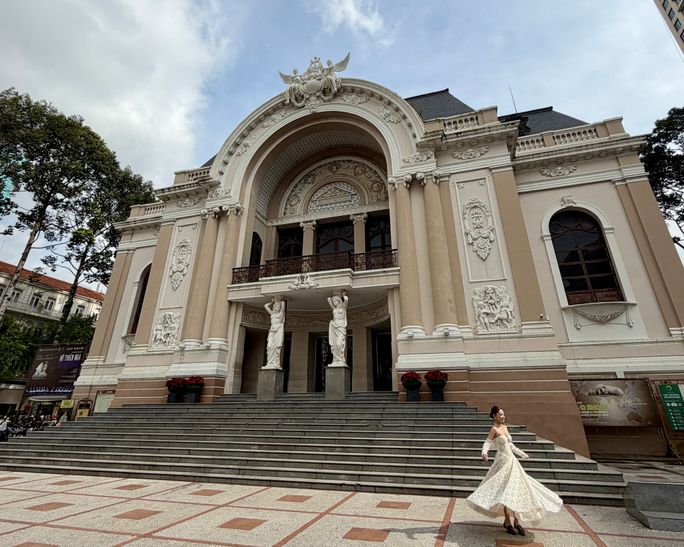
Saigon Opera House. (Photo Credit: Chelsea Davis)
Extend Your Trip: Ho Chi Minh City (Saigon)
For
travelers pairing Phu Quoc with a city stop, Ho Chi Minh City is a natural
extension. As a first-time visitor, the contrast is immediate—faster pace,
crowded streets, layered history, and distinctly urban energy.
Start
at the War Remnants Museum for essential historical context, then visit the Cu
Chi Tunnels, a vast underground network used by the Viet Cong during the
Vietnam War. Stretching for miles beneath the countryside, the tunnels once
housed living quarters, hospitals, supply routes, and command centers.
Visitors
can explore sections of the tunnels themselves and gain a striking
understanding of how soldiers lived and survived underground.
Beyond
history, Saigon’s charm lies in its everyday rhythms. Coffee culture is
especially vibrant, with cafés hidden inside unmarked apartment buildings. I
tried everything from egg coffee to salted cream and frozen coconut versions.
Standouts
include Cong Cafe, Found & Been Found, and Cafe Apartment, a nine-story
building packed with cafés, boutiques, and bars.
Architectural
landmarks such as the Central Post Office and the Saigon Opera House highlight
the city’s French colonial legacy. If possible, catch a performance at the
opera house, which hosts everything from ballet and opera to modern dance and
acrobatics.
For
accommodations, both The Myst Dong Khoi and the Sheraton Saigon Grand Opera
Hotel offer strong but different experiences.
Set
along the Saigon River in District 1, The Myst Dong Khoi is a boutique,
design-driven hotel. The modernist tower property blends unique architecture
with residential interiors featuring dark wood accents and hand-carved wood
furniture, unique archways, stained-glass details, and rooms with balconies and
private jacuzzis.
The
property also offers several dining options, including Rooty Bar, The Nest
Restaurant, and Bason Café.
Meanwhile,
the Sheraton Saigon Grand Opera Hotel offers a more classic luxury stay and an
unbeatable central base—along with one of the city’s standout Chinese dining
destinations.
Located
in the heart of District 1, just steps from the Saigon Opera House, I stayed in
the recently opened Grand Opera Tower, which feels like a luxury hotel within a
larger luxury hotel.
The
tower features spacious, comfort-driven rooms with sweeping city views; mine
looked out toward Landmark 81, the Saigon River and the Ba Son Bridge,
stretching toward Empire City.
Subtle
design details throughout the rooms nod to both the neighboring opera house and
Saigon’s broader cultural heritage, from layered headboards and lotus motifs to
delicate mother-of-pearl inlays inspired by traditional Vietnamese
craftsmanship.
Its
central location makes it especially convenient for first-time visitors who
want to be within walking distance of major landmarks while still having a calm
retreat at the end of the day.
Guests
should not skip Li Bai—the property’s elevated, signature Cantonese restaurant.
Led by a seasoned culinary team with roots in Guangdong, Li Bai blends
traditional Cantonese with modernity and beautiful presentation.
It
offers everything from a variety of dim sum like truffled pork ‘xiao long bao’
and crispy foie gras, pork and taro puff to seafood and traditional barbecue
dishes, including its signature 10-day dry-aged Peking duck, which is presented
tableside—one of the best Peking ducks I’ve ever had.
For the latest travel news, updates and deals, subscribe to the daily TravelPulse newsletter.
