

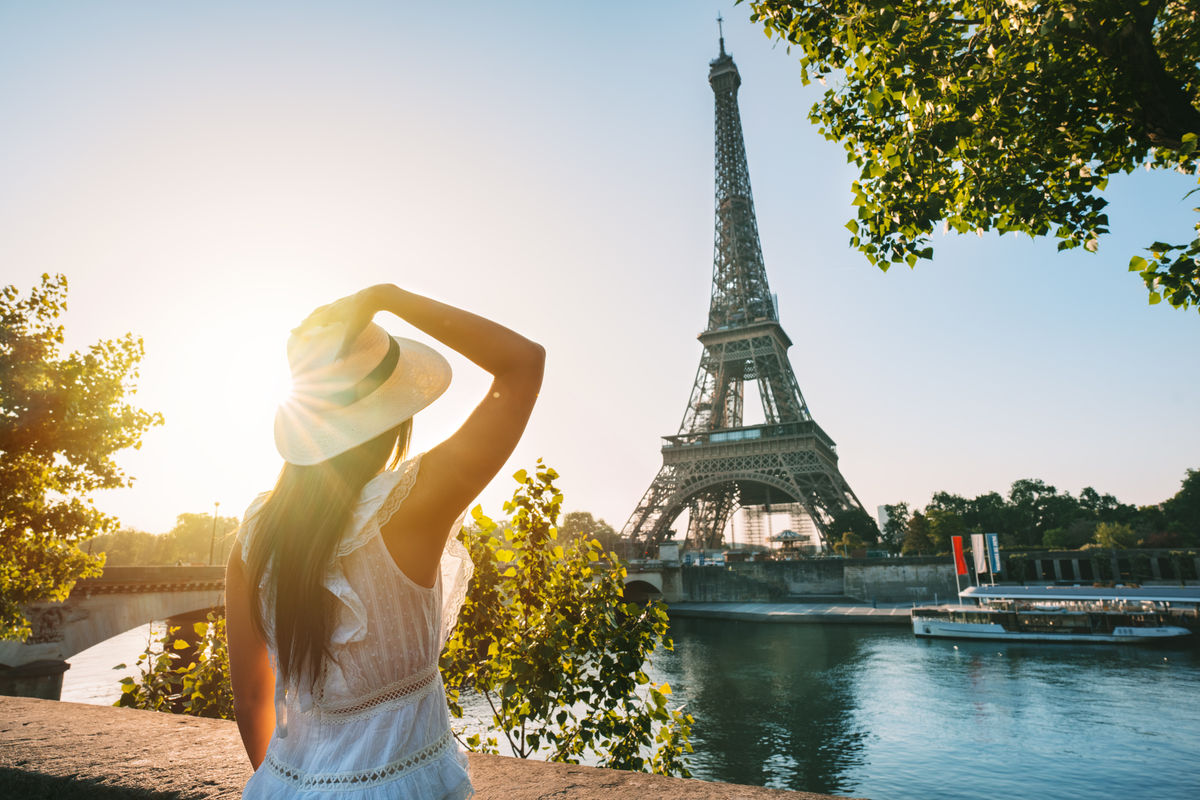

Welcome to 2026 in Europe.
While we don’t know everything the travel year ahead has in store for us, we do know that barring something totally unexpected, Europe will once again be the world’s most visited region.
A year ago at this time, Europe was coming off another year of being the world’s most visited region, welcoming approximately 747 million international tourists, a number that not only surpassed pre-pandemic totals but also shows off the continent’s enduring appeal. The 2025 numbers aren’t in yet, but they’re sure to tell another chapter of the continent’s seemingly never-ending popularity.
What makes Europe so beloved? The pretty piazzas, plazas and pedestrian-filled boulevards of the continent? The cathedrals, castles and ancient ruins? Medieval cobbled streets, museums and some of the best wine and food in the world? The fact that it is almost always safe for visitors and so many countries and cultures are so close together?
All of the above play a big role, but for many, it’s the experience of living the “European lifestyle” that stays with them long after their trip and has them coming back for more.
The only negative is that with all this popularity, crowds can be a problem, and destinations all over Europe are finding their own solutions for issues around overtourism. Rest assured, by adding a little creativity to your itinerary, you can almost always swerve the worst of crowds.
The perfect destination for first-time international travelers while also providing a travel buzz for those visiting for the twentieth time, Europe is all things to all travelers. Keep reading to get yourself or your client ready for the year ahead in Europe.
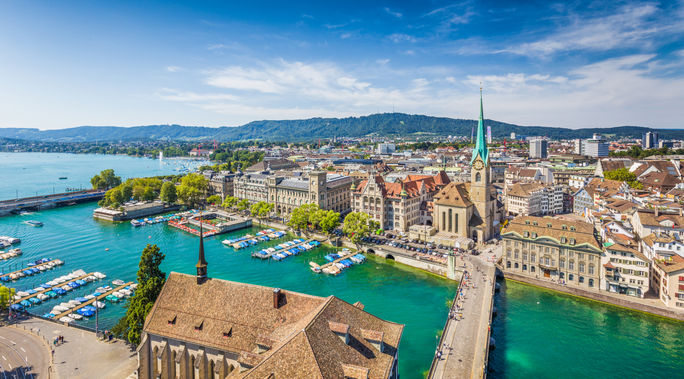
City Center in Zurich, Switzerland. (Photo Credit: Adobe Stock/JFL Photography)
Best Destinations in Europe
You could toss a dart at a map of Europe, and it would likely land on a dot capable of providing a trip full of pinch-me moments. When it comes to Europe in 2026 though, there are a few places that you should focus on: Switzerland, Poland and Denmark.
With breathtaking alpine landscapes, culture-rich cities and four official languages, Switzerland is a melting pot of quintessentially European experiences which just so happens to be the home to pots full of melty fondue.
Culturally, Switzerland will have another solid year, from Zurich’s ever-growing Film Festival (September 24 – October 4) and Basel’s world-renowned Art Basel (June 18-21) to the Lucerne Festival (awaiting dates) and the rockstar Montreux Jazz Festival celebrating its 60th birthday (July 3-18). The latter is renowned for A-list artists performing against the gorgeous backdrop of Lake Geneva and has grown to become the most talked about summer jazz festival in Europe.
Beyond the big cities, the region of Ticino will show off its southern, almost Mediterranean vibe with open-air summer festivals along palm-lined lakes, while the town of Vevey looks set to see its blend of vineyard-covered slopes, wine trails and quirky artwork soar in popularity. Interlaken will once again be one of the best bases to experience the best of the country, offering adrenaline-fueled alpine activities at whichever pace you choose (lazy mountain strolls that end in a slice of cake or paragliding over the Alps, you choose).
Add in medieval beauties like Fribourg, breathtaking mountain villages like Mürren, panoramic train journeys and one of the most seamless transportation systems in the world, and Switzerland is set to offer everybody a thrill in 2026.
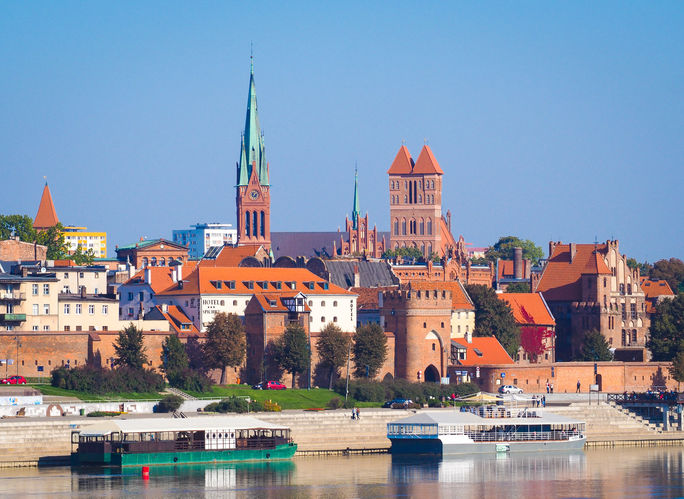
Riverside in Torun, Poland. (kishjar? / Flickr)
Seemingly every year, Poland edges a little closer to a broader breakthrough on European itineraries, so fresh off its starring role in the critically acclaimed 2025 film A Real Pain, why not make 2026 the year you explore this fascinating country? Long valued by those in the know for its cultural depth and value proposition, the country makes it remarkably easy to combine mountains, seaside escapes and culture-rich cities in one trip.
Naturally, Krakow and Warsaw draw the biggest crowds, and you should see them for sure, but there is still so much waiting to be discovered here. For example, in the southwest, the Karkonosze Mountains deliver classic alpine scenery layered with new energy, as a dense network of trails, waterfalls and historic sights is joined by the opening of QUERION, a new attraction designed to complement outdoor adventures year-round.
Up north, the Tri-City area of Gdańsk, Gdynia and Sopot brings together historic streets and Baltic breezes with fresh ways to explore the coast, including a new electric water tram across the Bay of Puck that turns a simple day trip into a unique experience in its own right. Add in the placid lakes and living history of Warmia and Mazury and the charming with a capital “C” town of Toruń and you have just a few of the things that are ready to be discovered in Poland.
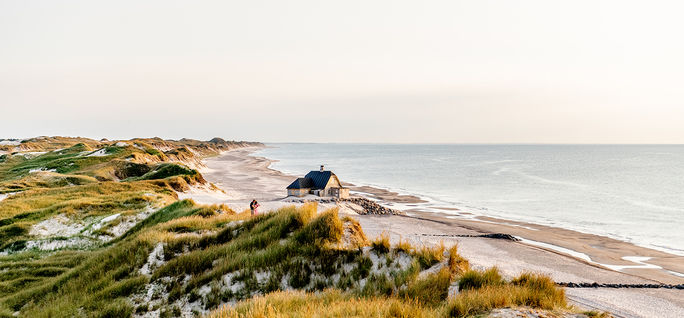
Beach near Skagen, Denmark (Photo Credit: Mette Johnsen for The Nordics)
Long admired for its design-forward cities, cycling culture and buzzy food scene, Denmark is set to take things up a notch in 2026. Aarhus and Odense will be as attractive and rewarding as ever in 2026 while a new cosmic layer will be added to the country’s offerings with travelers invited to slow down and look skyward in its growing network of Dark Sky Parks. From the chalky cliffs of Møn to the remote islands of the Wadden Sea, you’ll be able to see Danish stars like never before.
And while it may not be included in the Dark Sky Parks, cute as a button Ærø Island will once again offer a true time warp experience with its postcard-perfect cobblestoned lanes a stone’s throw from the sea. In capital Copenhagen, the spotlight shifts from nature to foodie culture, with Tivoli Gardens hosting the Michelin Guide Ceremony for the Nordic Countries, once again showing Denmark’s transformation into one of Europe’s most exciting culinary destinations is complete.
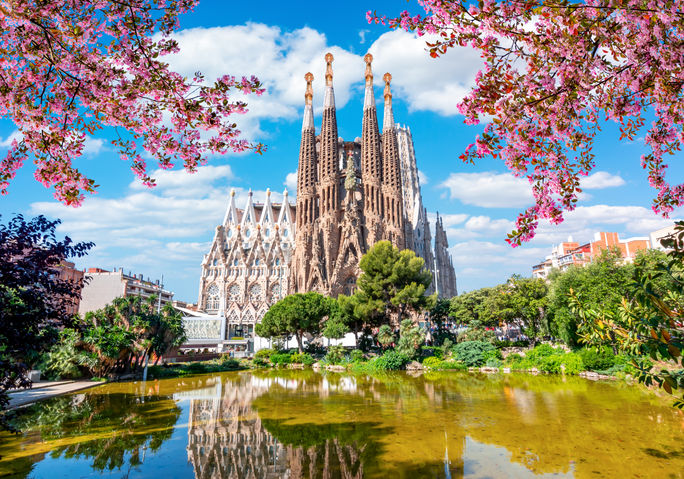
The Sagrada Familia basilica in Barcelona, Spain. (Photo Credit: Adobe Stock/Mistervlad)
Best Attractions in Europe
Europe is stacked with unforgettable sights, attractions so iconic that you might just have to rub your eyes to make sure you’re actually seeing them in person. Yes, the list is long of signature attractions, but there are a few that stand head and shoulders above the rest, some of them literally.
When it comes to ancient wonders, the Acropolis in Athens and Stonehenge in England never fail to capture our imagination while the Colosseum, and the Forum in Rome, alongside the ruined city of Pompeii near Naples all offer a fascinating peek into the past.
Then there are the iconic modern marvels that have become true emblems of Europe: the Eiffel Tower, Big Ben, the Brandenburg Gate and Barcelona’s like-no-church-you-ever-saw-before Sagrada Familia. The latter will mark a major milestone toward its completion in 2026, which happens to be the 100th anniversary of the death of its original designer Antoni Gaudí, with a host of commemorative events.
But those are just the introduction to attractions in Europe, as world-class museums like the Prado in Madrid, the Louvre in Paris, the Rijksmuseum in Amsterdam have become A-list attractions in their own right alongside pinch-me castles and palaces like the Alhambra in Granada, Prague Castle, the Palace of Versailles, Edinburgh Castle and Schönbrunn Palace in Vienna.
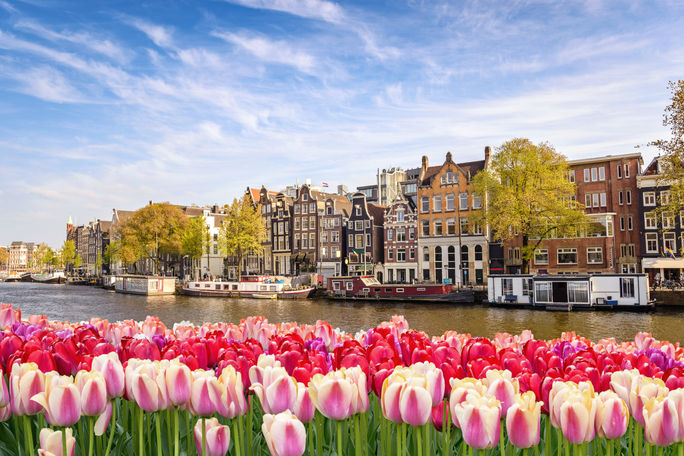
Historic buildings along a canal in Amsterdam, The Netherlands. (Photo Credit: Adobe Stock/Noppasinw)
Must See 2026 Events in Europe
Europe boasts a packed events calendar each year, but one event specific to 2026 will grab the biggest headlines: the Winter Olympics in Milan & Cortina, Italy (February 4-22).
The Olympics are just the start of the fun as Carnival season will once again turn the continent into a party in the weeks leading up to Fat Tuesday (February 17), with cities like Nice, Cologne, Basel and the Spanish island of Tenerife hosting some of the continent’s liveliest parties.
In spring, Spain comes alive with its Holy Week events and seasonal fairs, while the Netherlands will once again paint its towns orange on King’s Day (April 27) while also welcoming the colorful annual tulip bloom. Eurovision will have music lovers glued to the TV sets on May 16, the night of the grand final, which will be held in Vienna.
As the temperatures rise and the sun stays out until nearly 10 p.m., music festivals take center stage, with Tomorrowland in Belgium (July 17-19 and 24-26) drawing crowds for days filled with music and dancing alongside heavy hitters like Way Out West in Gothenburg, Sweden (August 13-15), Sziget in Budapest, Hungary (August 11-15) and Love International in Tisno, Croatia (July 8-14). Summer is also the time for national parties like Constitution Day in Norway (May 17) and Swiss National Day (August 1). And this year, there will be a total solar eclipse on August 12, visible in parts of Spain, Portugal, Iceland and Greenland, with partial eclipses in other European locations.
Autumn ushers in major German shindigs at Oktoberfest (September 19 – October 4) in Munich and Cannstatter Volksfest (September 25 – October 11) in Stuttgart, where the frothy steins and new friendships will flow once again. It’s also the time for harvest festivals like the Alba White Truffle Festival in Italy. And of course, Europe finishes the year in festive style with its magical Christmas markets and New Year’s Eve celebrations, the most famous of the latter being Hogmanay in Scotland.
No matter where you’re going, a check of the local events calendar online is sure to reveal a fun happening that will show you an authentic slice of the place you’re visiting.
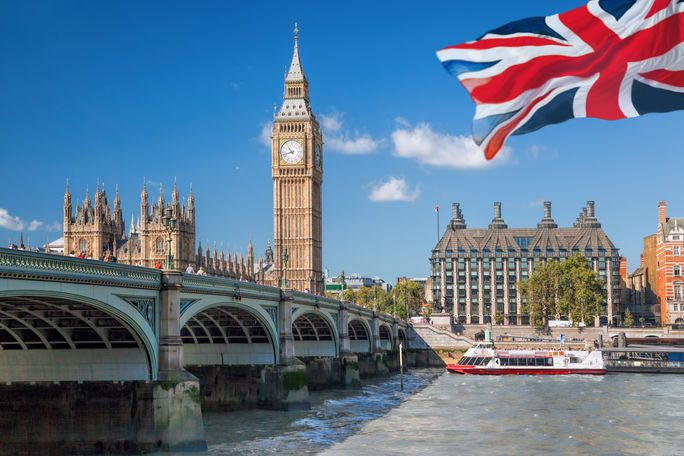
Big Ben and the Houses of Parliament in London, England, UK. (Photo Credit: Adobe Stock/Tomas Marek)
Best Places for Families in Europe
Europe is the perfect place to get your family’s feet wet with international travel and many of your children’s favorite tales and characters call the continent home. While the entire continent has a pull for families, some destinations stand out as especially great: the British Isles, Germany and the Netherlands.
On the islands of Britain and Ireland, there is no language barrier (the local lingo might throw you for an occasional loop, but you’ll probably get a kick out of it!), but there’s a wealth of attractions tied to family favorite TV shows and films. London is a true star for families, boasting a wealth of iconic historical landmarks that will put smiles on your crew’s faces. Simply seeing the Changing of the Guard or listening to tales at the Tower of London can be a trip highlight, and that’s before you dig into the world of Paddington, Harry Potter or Peppa Pig.
Older kids will enjoy seeing sights connected to Bridgerton, Derry Girls, and Outlander. And let’s not forget the draw of Premier League games and locations associated with Ted Lasso and Welcome to Wrexham, which have made many fans out of American soccer families.
In Germany, you’ll see towns and landscapes that feel like they are taken from a storybook. And they very well should do as this is the land of the Brothers Grimm and you can retrace their steps (alongside their characters) in lovely half-timbered towns. Germany is also home to the second most visited European theme park after Disneyland Paris: Europa Park.
The Netherlands is easy to get around and kids are destined to be intrigued by canals, windmills and the fun happenings at one of the nation’s fun cheese markets. The Netherlands is also home to the magical theme park called Efteling, which feels like a fairy tale from start to finish.
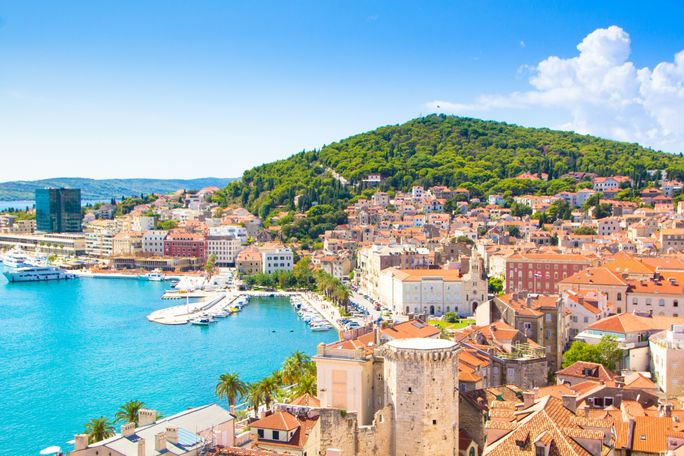
Split, Croatia (Photo Credit: Courtesy AdobeStock)
Best Places for Couples in Europe
Croatia and Portugal are hot, and they’re both two of the best places in Europe for couples due to their perfect mix of romantic landscapes and experiences. No, couples’ trips don’t get much better than the ones available in the Douro Valley, all draped in vineyards or by hopscotching the islands of Croatia hand in hand.
City-wise, Lisbon and its romantic overlooks ooze charm as does Split, Croatia, especially if you catch the Old Town late at night with the stone walls still radiating some heat from the summer sun.
And when it comes to Greece, the timeless charm of this nation is nearly unmatched, and you won’t find a better combination of sunsets and local wine anywhere in Europe. Tip: the more off the beaten path you go on the islands or the Peloponnese peninsula, the more you’ll both love it.
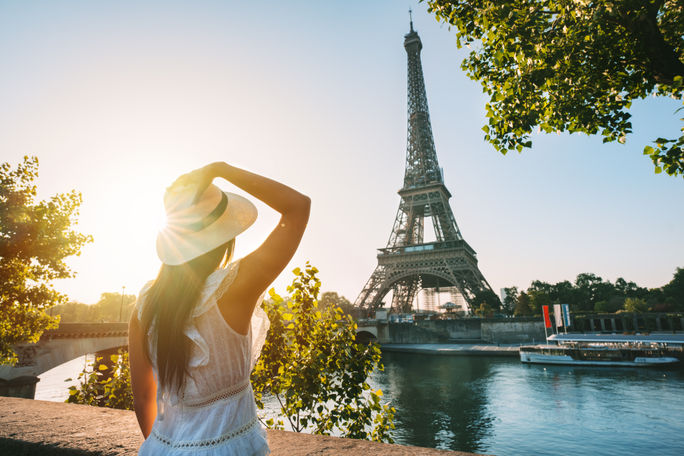
Tourist enjoying the Eiffel Tower in Paris, France. (Photo Credit: Creative Cat Studio/Adobe)
Best Places for Group Travel in Europe
If you’re organizing a trip for a group, it pays to stick with the heavy hitters, as Europe’s classic big cities deliver every single time with a list of things to do guaranteed to satisfy everybody in your group. Rome, Barcelona, London, Paris and Berlin all have the scale, energy and depth to keep a wide range of personalities happy, which is no small feat when you’re traveling as a group. Here, world-class museums, unforgettable meals, excellent shopping and a nightlife ensures that nobody ever feels left out.
Since they are almost always major transport hubs, these cities can also be used as great bases for day trips and onward travel.
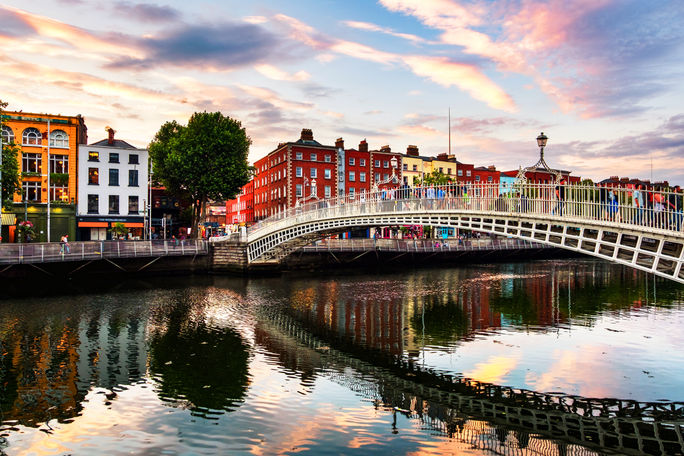
View of the Ha’penny Bridge in Dublin, Ireland. (Photo Credit: Madrugada Verde/Adobe Stock)
Best Places for Solo Travel in Europe
Sometimes you just have to go it alone, and it turns out that Europe is a perfect place for solo travel, too. With the continent’s impressive rail & bus networks, range of accommodations (everything from budget hotels and hostels to five-star luxury) and thousands of organized tours where you can make friends while learning about a destination’s history, food or culture, you won’t miss a thing traveling as a party of one.
Northern European cities like Amsterdam, Edinburgh, Dublin and Bruges are perfect for solo adventurers as they’re overwhelmingly safe, easy to navigate and full of other travelers eager to swap stories.
In Central Europe, the gorgeous capitals of Prague, Vienna and Budapest beckon alongside the pretty Polish city of Krakow. All are full of quintessential European attractions while being safe and home to a tried and trusted traveler-friendly infrastructure.
Scandinavia is also the perfect playground for solo travelers as cities like Bergen, Oslo, Stockholm, Gothenburg and Helsinki are not only ridiculously safe (some of the safest in the world, even) and less crowded than southern destinations, but they also feature a rock-solid list of attractions to keep you entertained.
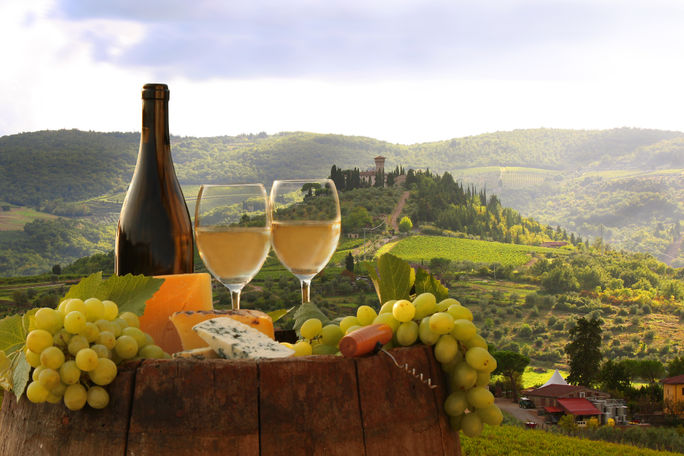
Wine, grapes and cheese at a vineyard in Chianti, Tuscany, Italy. (Photo Credit: Adobe Stock/Tomas Marek)
Best Foodie Destinations in Europe
There used to be a time when France and Italy were undisputed kings of the hill of the European culinary scene. Oh, how the mighty have been joined by their neighbors. These days, the list of must-eats and the map of foodie cities are both expanding rapidly.
Foodies will fall head over heels for cities like Paris and London where you can taste food from all over the world in addition to the best national dishes done in classic form or with a modern flourish. Then, head north to indulge in cutting-edge New Nordic cuisine in Copenhagen alongside some of the continent’s best international street food and craft beer. Belgium is often said to possess the culinary prowess of neighboring France, but the good habit of serving its food in German portions. To say nothing of the mouthwatering tapas and wine in Spain, the paprika-kissed dishes of Hungary or the wine and seafood of Portugal.
Some regions where you can’t go wrong are the English Lake District and its gastro pubs, Spain’s Basque Country, where world-class restaurants appear to grow on trees and Germany’s Black Forest region, which is known for its restaurants as much as its romantic landscapes.
Despite all the competition, don’t be shocked if your best Foodie experiences are in a casual bistro in Lyon, France or in a trattoria in Bologna, as France and Italy are still delicious playgrounds for those who are passionate about food.
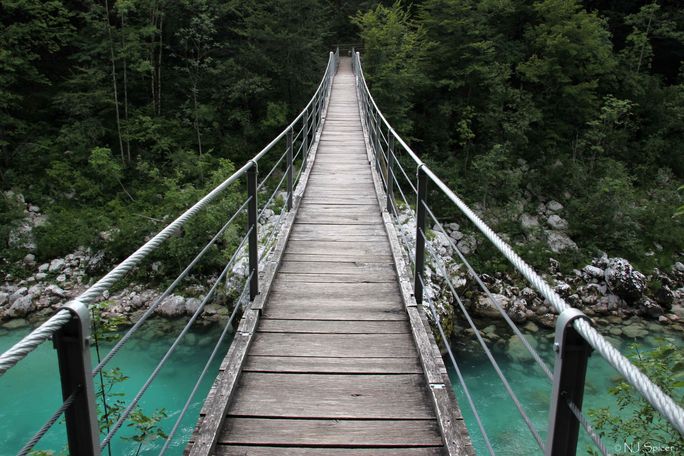
The Soca Valley in Slovenia (Photo Credit: neiljs / Flickr)
Best Places for Adventure Travel in Europe
If European adventure travel has a spiritual home, it would be somewhere high in the Alps. On this majestic mountain range, Europe turns the adrenaline level up, with legendary destinations like Chamonix, France, Kitzbühel, Austria and Interlaken, Switzerland offering access to everything from high-altitude hiking and glacier skiing to paragliding and canyoning and the infrastructure to give you a well-rounded experience. Add in Slovenia’s scenic yet underexplored corner of the Alps, where teal rivers and well-marked trails make white-water rafting and hiking excellent, and you’ve got a region that consistently delivers big thrills with minimal effort.
But the Alps are only the beginning. The rugged Tatra Mountains of Slovakia and Poland remain one of the continent’s best-value settings for outdoor sports, while Norway’s wide open northern landscapes reward those willing to strap on their boots and take on the elements of the far North. Down south, the winds of Tarifa, Spain, continue to make it Europe’s kitesurfing capital, while Portugal’s Atlantic coast serves up some of the best surfing on the continent.
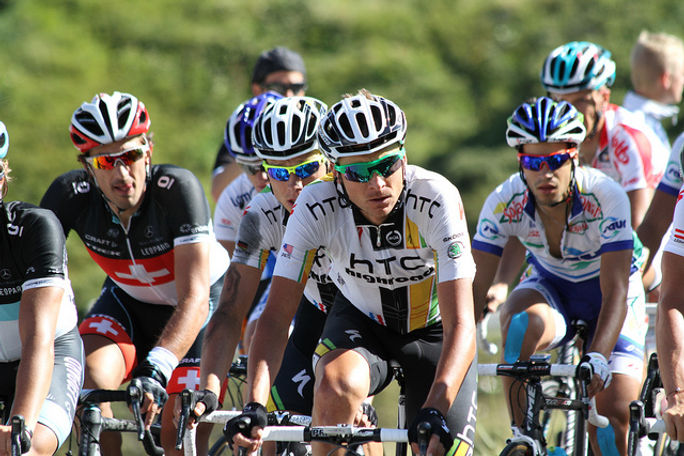
PHOTO: A group of Tour de France cyclists. (photo via Flickr/charel.irrthum)
Best Places for Sports Enthusiasts in Europe
Europe’s love affair with sports is undeniable, so if you’re a sports fan, trying a game during your trip is destined to turn into a highlight. In 2026, the calendar is packed with must-sees for the sports nuts. None bigger than the aforementioned Olympics, which will take place in February in northern Italy. Elsewhere, the Tour de France (July 4-26) will embark on its 113th edition with a start in Barcelona before winding its way through iconic climbs and countryside to its signature Paris finish.
For speed lovers, the Formula 1 season delivers some standout races from the legendary streets of Monaco (June 4–7) to Spa-Francorchamps in Belgium (July 17–19), where engines roar and you can join the fans on the nearby hillsides.
Tennis fans will want to make their way to Paris for the French Open (May 24 – June 7) while Wimbledon takes place soon after (June 29 – July 12). Golf fans will want to make a beeline for The Open Championship (British Open), which will take place at Royal Birkdale course this summer (July 16-19).
Rugby will take over weekends from February 6 – March 14 as England, Scotland, Wales, France, Italy and Ireland contest the Six Nations. Last but not least, European Club Soccer’s marquee match, the UEFA Champions League Final, will be held on May 30 in Budapest, bringing Europe’s club football season to a crescendo.
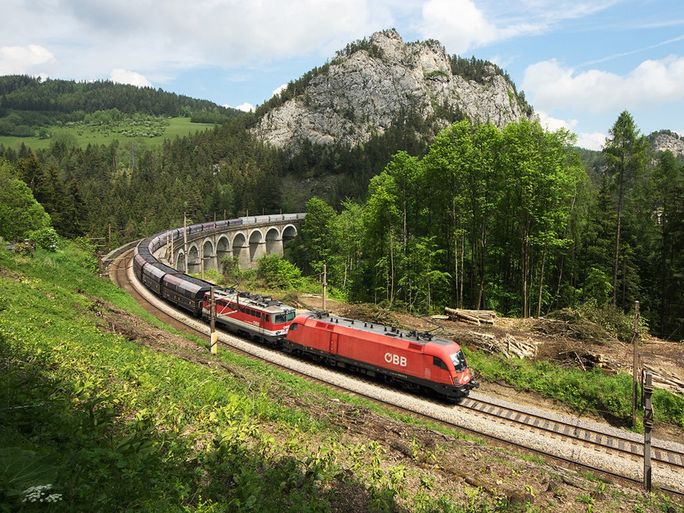
Train on the scenic Semmering Railway in Austria. (Photo via Miroslav Volek / Flickr)
Unique to Europe
You can see historic sights and moving artwork anywhere in the world. Ditto for great food and pretty scenery, but nowhere puts it all together quite like Europe.
Imagine starting your day by feasting on a flaky French croissant at a sidewalk cafe, then taking the train to Switzerland, where you hop off to do a bit of shopping and have some lunch, a meal that you order from your waiter while speaking German. A few hours later, and still make it to Italy in time for a glass of local wine and a platter of antipasti that leaves you speechless.
While this isnt’ a typical day in Europe, it’s perfectly possible to do it, showing off the fact that nowhere else compresses so many countries, cultures and small foodi & drink delights into such a small space and makes it so easy to explore by public transportation, namely an extensive network of railways.
If you’ve never been, make 2026 the year you head across the pond and see what all the fuss is about. And if you’re an experienced European traveler, enjoy planning your next trip.
For the latest travel news, updates and deals, subscribe to the daily TravelPulse newsletter.
