

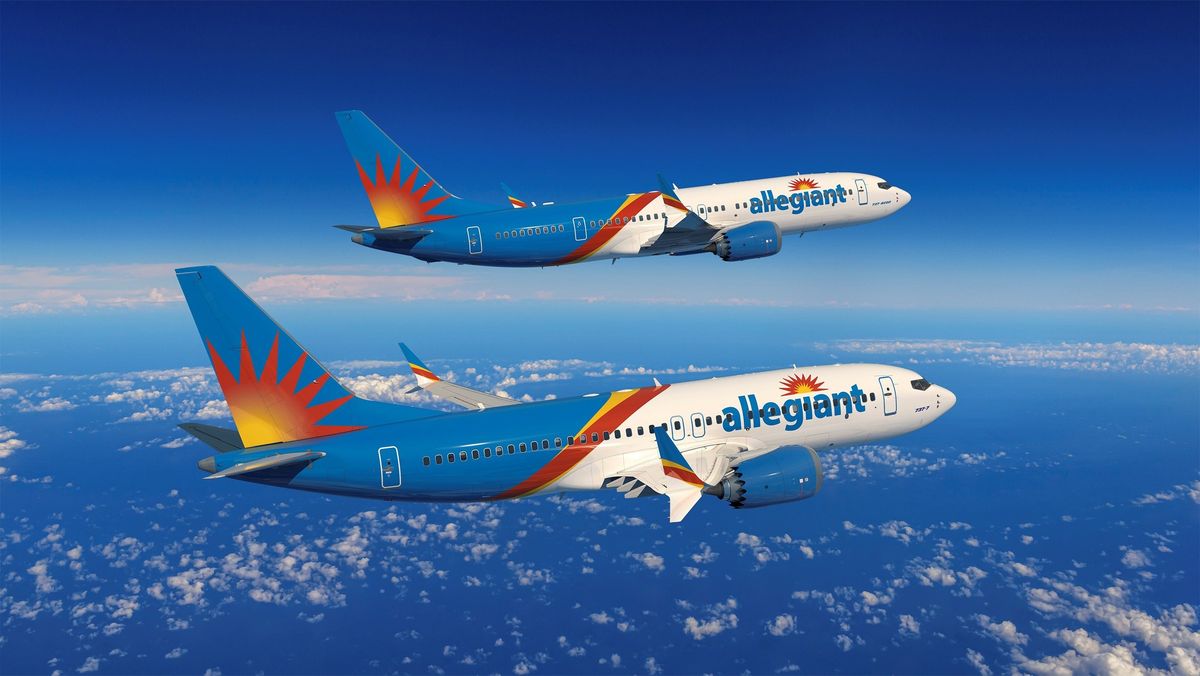

Sunday evening’s announcement that Allegiant
would acquire Sun Country Airlines in a $1.5 billion cash-and-stock deal
was met with varied reactions.
Each airline, operating slightly different versions of the
Ultra-Low-Cost Carrier (ULCC) model, has its own, largely separate target
market. Allegiant has built its brand on connecting small and medium-sized
cities nonstop to large leisure markets like Las Vegas and Florida. Sun
Country’s network primarily serves Minneapolis-St. Paul, plus a smattering of
other markets and whatever passengers it happens to connect via Minneapolis.
What Happens Now?
With the number of airlines that have merged over the last
two decades, the industry is used to the standard statements at this stage: the
airlines will continue to operate separately until receiving regulatory
approvals, then they will work to combine the two brands.
Both the Department of Justice (DOJ) and the Department of
Transportation (DOT) will scrutinize the deal to ensure that the proposed
combination doesn’t violate any anti-trust laws, reduce consumer choice, or
raise fares. This is exceptionally unlikely with these two carriers. Allegiant
is the 9th-largest airline in the United States by passengers carried; Sun
Country is 11th. A combined airline wouldn’t budge its position in
the rankings, leaving it at half the size of the 8th-ranked Frontier Airlines,
or just over 60%.
Another point of scrutiny for regulators is how many nonstop
air markets the carriers overlap on, ostensibly because a merger would
eliminate competition on those routes. Allegiant and Sun Country have almost no
direct route overlap (they both operate a flight from Appleton, WI, to Fort
Myers, FL during the winter season).
Both DOJ and DOT can elect to sue to stop a merger or issue
a notice to carriers that they must make changes to satisfy anti-trust laws
before they will approve a combination. Because there appear to be few
anti-trust concerns in this case, approvals could come quickly, though it’s
ultimately up to each department to review the proposal.
Unions for each company will also have to negotiate how they
want to combine. The Teamsters Union represents pilots at Allegiant, while
pilots at Sun Country are represented by the Airline Pilots Association (ALPA),
which has negotiated a substantially more generous contract for its members.
Moving forward, pilots will have to choose which union they wish to be
represented by and negotiate how to combine the two seniority lists. Flight
attendants for each carrier also belong to different unions: the Transport
Workers Union (TWU) for Allegiant and the Teamsters for Sun Country.
Flight attendants for both airlines have recently ratified
new contracts, while pilot contract negotiations at both airlines are ongoing.
Teamsters-represented pilots at Allegiant have become increasingly vocal about
the pace of the talks, holding
informational pickets late last year.
Sun Country’s ALPA chapter stated in response to the
proposed acquisition:
“ALPA has 90 years of experience negotiating mergers, large
and small, between ALPA carriers and ALPA-to-non-ALPA carriers such as
Allegiant. We will be reaching out
to IBT leadership to begin collaborative efforts toward a
fair and equitable integration of the pilot seniority lists. In addition,
we will jointly develop a comprehensive Collective Bargaining
Agreement that reflects the best interests of both groups.”
What Will a Combined Airline Look Like?
The combined airline will offer more destinations. Allegiant
currently flies only within the United States, while Sun Country provides
flights to Mexico, Central America, and the Caribbean, primarily from
Minneapolis and Dallas/Fort Worth. With existing international operations,
including the necessary route authorities, landing rights, and endorsements on
its operator’s certificate, Sun Country brings Allegiant the value of
international access. By combining certificates, Allegiant would have faster,
easier options to expand international service acquired from Sun Country rather
than building its own from scratch.
The move could also change the character of each airline.
Sun Country has long offered connecting flights, both on its own network and to
the networks of select partner airlines, including China Airlines, Icelandair,
EVA Air, Emirates, and Condor. Allegiant, by contrast, only sells nonstop
flights and doesn’t partner with other airlines, even for international
flights.
Allegiant could ultimately change its position on connecting
flights, though it should be noted that offering connections and international
service often adds operational complexities that can increase costs (and,
consequently, fares).
Aside from connections and international flying, the
airlines are similar. Both charge for seat assignments, checked and carry-on
bags, and changes to a ticket. One difference is that Sun Country still offers
complimentary soft drinks, while alcoholic drinks and snacks are available for
a charge. Allegiant charges for all beverages and snacks onboard.
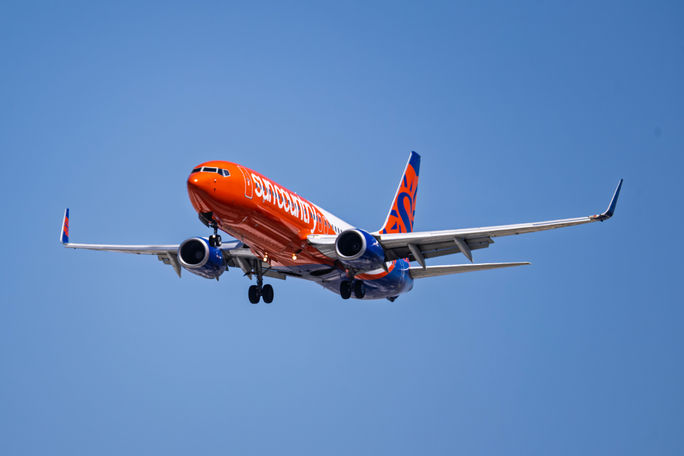
Sun Country Airlines plane arriving at Harry Reid International Airport. (Photo Credit: robin / Adobe Stock)
The Competitive Landscape
The acquisition proposal comes at a time when the continued
viability of the ULCC model is being strongly questioned. Spirit Airlines, the
country’s largest ULCC, is rapidly shrinking, cutting
flights and jobs as it reorganizes
in Chapter 11. There’s even talk of its own merger
with Frontier Airlines, which has been facing turmoil, letting
go of CEO Barry Biffle in late December amid a major brand overhaul to
return the airline to consistent profitability.
ULCCs have struggled post-pandemic, as the most
price-sensitive consumers have dropped out of the market and the remaining
travelers seek premium experiences. The nation’s large network carriers have
also rolled out restricted fares, offering pricing similar to ULCCs while
providing the added benefits of their large frequent-flier programs, better
onboard service, and global reach at the same price.
Between ULCCs, however, there are two different operating
philosophies. Larger airlines like Frontier and Spirit have bet on flying in
large markets also served by large network airlines, hoping to skim off
price-sensitive consumers during high-demand periods. This model relies on
fuller flights and higher aircraft utilization, so if they can’t fill aircraft
or can’t fly them as much, they lose money.
Sun Country and Allegiant both subscribe to a
lower-utilization model, keeping operating costs lower and allowing them to
avoid flying when leisure passenger demand craters, like on winter weekdays.
This will enable them to focus on leisure flying in smaller markets, where
traffic concentrates in specific cities around the weekend. They can operate
profitably by scheduling more surgeries, only flying when they can be sure to
fill enough seats.
The model hasn’t been without missteps. During informational
picketing in November, the pilots’ union complained that Allegiant’s management
had instead “continue[d] to pour millions of dollars into failed
resorts, stadium deals, and entertainment ventures” while asking its pilots
for contract concessions.
For the latest travel news, updates and deals, subscribe to the daily TravelPulse newsletter.
